
When most people picture Baja California Sur, they imagine endless blue skies, golden sand, warm Pacific water, and spectacular sunsets.
And most of the time, that picture is absolutely right.
But if you’re planning a trip during the Cerritos Beach rainy season or wondering what to expect during the Cabo San Lucas rain season , there’s another side of Baja worth understanding.
Rainy season in Baja California Sur isn’t the prolonged, gray weather many travelers associate with tropical destinations. Rain is generally limited, often arriving in short—but sometimes intense—storms, particularly during summer and early fall. September is typically one of the wettest months around Cabo San Lucas.
That means a rainy-season trip can still include beautiful beach days, warm ocean temperatures, unforgettable sunsets, and plenty of time outdoors.
The key is knowing how to read the weather and being prepared for changing conditions.
When Is Rainy Season in Cabo San Lucas and Cerritos Beach?
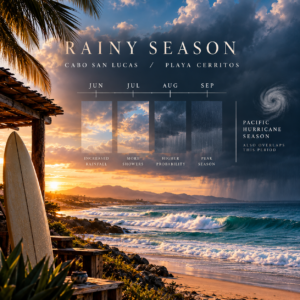
The Cabo San Lucas rain season generally occurs during the warmer months, with rainfall becoming more noticeable from summer into early fall.
From June through September , travelers should pay closer attention, with August and September carrying the highest probability of significant rainfall and tropical weather. This period also overlaps with the Eastern Pacific hurricane season.
Cerritos Beach has its own unique atmosphere thanks to its location on the Pacific coast near Todos Santos and El Pescadero. The beach remains beautiful throughout the year, and summer is often an excellent season for surfing thanks to consistent Pacific swells.
So, should you avoid Cerritos Beach during rainy season?
Not at all
It simply means traveling with a little more awareness and common sense.
What Is Cerritos Beach Weather Like During Rainy Season?
Understanding Cerritos Beach weather is important because conditions can change surprisingly quickly.
A typical summer day may begin with sunshine and perfect beach conditions before clouds, wind, or a brief rainstorm arrive later in the afternoon. In many cases, the sky clears again shortly afterward.
That’s one of the things that makes Baja different from destinations where rainy season means constant precipitation.
A cloudy sky doesn’t automatically mean your beach day is over.
Instead, check the latest local forecast and watch how conditions develop.

Check the Weather Before Heading to the Beach
Before leaving your hotel, vacation rental, or home, take a moment to check:
* Rain and thunderstorm forecasts
* Wind conditions
* Lightning activity
* Tropical storm or hurricane alerts
* Road conditions
* Local beach warnings

Weather can vary considerably between Cabo San Lucas, Todos Santos, El Pescadero, and Cerritos Beach.
If a significant storm is approaching, adjust your plans rather than forcing a beach day.
Baja always rewards flexibility.
Be Especially Careful During Heavy Rain
The biggest danger isn’t always the rain itself.
It’s the water that comes afterward.
Heavy storms can create temporary flooding, standing water, and hazardous road conditions. Roads that seem perfectly safe can change dramatically within minutes.
Never drive through moving water, even if another vehicle does.
The safest decision is always to turn around and find an alternative route.
A few extra minutes are never worth an unnecessary risk.
Driving From Cabo San Lucas to Cerritos Beach
Driving between Cabo San Lucas and Cerritos Beach is usually straightforward, but rainy weather requires extra attention.
During storms:
* Slow down.
* Leave more space between vehicles.
* Use your headlights when visibility decreases.
* Avoid sudden braking or sharp steering.
* Never use your phone while driving.
And most importantly, give yourself more time than usual.
There’s no prize for arriving ten minutes earlier.
Is Cerritos Beach Safe During Rainy Season?
Cerritos Beach is one of the best-known Pacific beaches in Baja California Sur and a favorite destination for surfers.
During rainy or stormy weather, ocean conditions can become less predictable.
Pay attention to:
* Stronger waves
* Ocean currents
* Sudden wind changes
* Lightning
* Reduced visibility
* Water quality and ocean conditions after heavy rainfall
If lifeguards or local authorities advise staying out of the water, always follow their guidance.
The Pacific deserves respect every day of the year.
Lightning: When to Leave the Beach
There’s one simple rule:
If you can hear thunder, get out of the water and leave open areas immediately.**
The beach and the ocean provide very little protection during electrical storms.
Don’t wait until the storm is directly overhead.
Find proper shelter and wait until it passes.
What to Bring to Cerritos Beach During the Rainy Season
You don’t need to turn your beach bag into expedition gear.
A few smart essentials make all the difference:
* Lightweight waterproof jacket
* Waterproof phone pouch
* Dry bag
* Spare T-shirt
* Shoes with good grip
* Sunscreen
* Drinking water
* Portable charger
* Cap or hat
* Towel
Also protect your documents and electronics from unexpected rain.
And remember: even on cloudy days, UV radiation remains strong , so sunscreen is still essential.
Things to Do in Baja During Rainy Season
Rain doesn’t mean your vacation has to stop.
Explore Todos Santos
Spend the day discovering art galleries, boutique shops, cafés, restaurants, and the town’s historic streets.
Enjoy a Long Lunch
Sometimes the best response to a passing storm is simply slowing down and enjoying great local food while the weather clears.
Surf When Conditions Are Right
Summer often brings excellent Pacific swells, but surf conditions should always be assessed locally. Bigger waves aren’t automatically better for everyone.
Stay for the Sunset
Never assume rain cancels the sunset.
In fact, some of Baja’s most spectacular sunsets happen immediately after a storm, when dramatic clouds create incredible colors across the sky.
Rainy Season and Hurricane Season Are Not the Same Thing
This distinction matters.
Rain doesn’t automatically mean a hurricane is approaching.
However, the Eastern Pacific hurricane season officially runs from May 15 through November 30, overlapping the wetter months of the year.
If a tropical system is developing, rely on official weather information rather than rumors or social media.
Always take official warnings seriously.
Why Visit Cerritos Beach During the Rainy Season?
A better question might be:
What does Baja feel like when fewer people are here?
The coastline becomes quieter. The Pacific stays warm. Surf conditions can be outstanding, and the desert landscape transforms beautifully after rainfall.
For travelers looking for a more relaxed experience, the warmer months reveal a completely different side of Baja California Sur.
The Smart Way to Experience Baja
The Cerritos Beach rainy season isn’t something to fear.
It’s something to understand.
Check the forecast before leaving. Watch changing ocean conditions. Take lightning seriously. Drive carefully during heavy rain. Protect your belongings. And always have a backup plan.
Because in Baja, a sunny morning can become a dramatic afternoon—and that passing storm may lead to the most unforgettable sunset of your trip.

Big Fun Beach Club
At Big Fun Beach Club, we believe enjoying Baja is about much more than perfect weather.
It’s about knowing the coastline, respecting the environment, and making the most of every day.
Whether you’re visiting Cerritos Beach, exploring Todos Santos , or traveling from Cabo San Lucas, come prepared, stay aware of changing conditions, and leave room for spontaneity.
Stay safe. Stay flexible. Enjoy Baja
Sponsored By :